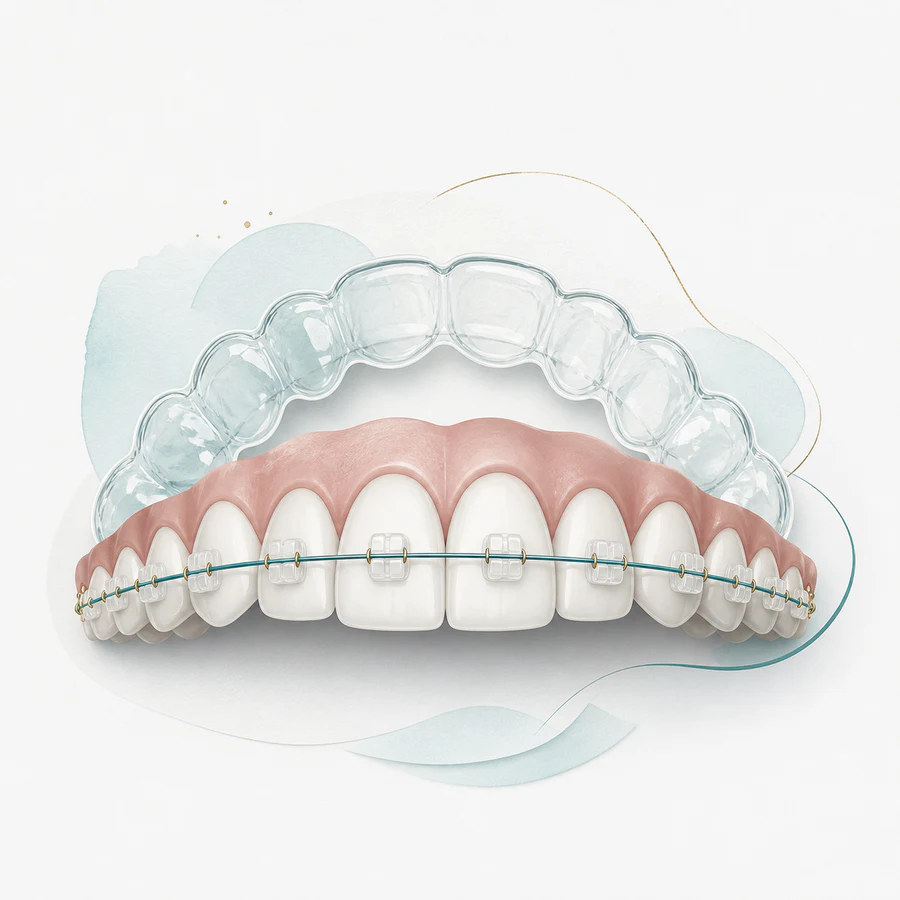
Orthodontic treatment uses fixed or removable appliances to guide tooth position and address selected bite concerns. The choice between braces, aligners and other appliances follows an assessment of the teeth, gums, bite, growth where relevant, and ability to follow the care plan.
Assessment first. Suitability is determined after an examination and any appropriate diagnostic records.
When might this treatment be considered?
These examples are general and cannot diagnose the cause of a concern.
Teeth are crowded, rotated or spaced.
The upper and lower teeth do not meet in a balanced way.
A removable or functional appliance may be useful during growth.
Retention is needed after active orthodontic treatment.
A habit is affecting tooth position or development and an appliance may be appropriate.
Treatment options
The most appropriate option depends on clinical findings, priorities and informed discussion.
Metal braces
Fixed brackets and wires provide controlled tooth movement across a wide range of orthodontic needs.
Ceramic braces
A fixed option using less noticeable tooth-coloured or clear brackets, where suitable.
Clear aligners
A series of removable clear trays may guide selected tooth movements when the patient and clinical situation are suitable.
Removable and functional appliances
These appliances may support selected tooth, jaw or bite changes, often with a prescribed wear routine.
Retainers and habit appliances
Retainers help hold teeth after active treatment; habit appliances may be considered after a separate assessment.
Services listed in this category
Metal braces
Ceramic braces
Clear or invisible aligners
Removable appliances
Functional orthodontic appliances
Retainers
Habit-breaking appliances
Assessment and diagnosis
A consultation helps the dentist understand the concern and identify appropriate next steps.
01
Discussion of alignment, bite, appearance and practical preferences.
02
Examination of the teeth, gums, jaw relationship and oral hygiene.
03
Appropriate photographs, measurements, models or scans only where available and clinically indicated.
04
Digital dental X-rays where needed for diagnosis and planning.
05
Review of treatment responsibilities, including cleaning, appliance wear and retention.
Treatment journey
What the process may involve
01
Orthodontic assessment
The dentist reviews the bite, tooth positions, oral health and treatment priorities.
02
Records and options
Relevant records support a comparison of suitable appliances and any preparatory care.
03
Active treatment
The appliance is fitted or supplied, with instructions for wear, cleaning and diet where relevant.
04
Progress reviews
Regular visits allow planned adjustments and checks of tooth movement, gums and appliance condition.
05
Retention
A retainer plan helps manage the natural tendency of teeth to move after active treatment.
Potential benefits and important considerations
Potential benefits
May improve tooth alignment and how the upper and lower teeth meet.
Can make selected crowded or spaced areas easier to clean.
Offers fixed and removable approaches for different clinical and practical needs.
Creates a planned retention stage after active movement.
Limitations and considerations
Clear aligners are not automatically suitable for every orthodontic concern.
Treatment depends on oral health, regular attendance and following appliance instructions.
Fixed braces require careful cleaning around brackets and wires.
Treatment length varies with complexity, growth, appliance choice and individual response.
Teeth can move after treatment, so retainers remain important.
Recovery or adaptation
Teeth and soft tissues may feel temporarily tender after fitting or adjustment.
Speech and saliva can take time to settle with some removable appliances.
The clinic provides advice for a loose, broken or uncomfortable appliance during visiting hours.
Treatment length and recovery vary according to clinical complexity and individual response. Follow the advice given for your own care.
Aftercare
Clean the teeth, gums and appliance exactly as demonstrated.
Wear removable appliances and retainers for the prescribed periods.
Follow food guidance intended to reduce breakage and plaque build-up.
Continue routine dental examinations during orthodontic treatment.
Frequently asked questions about braces & aligners
Neither is automatically better. The suitable option depends on the tooth movements needed, oral health, lifestyle, preferences and ability to follow wear and cleaning instructions.
No. Some tooth and bite movements may be better managed with fixed braces or another approach. A complete assessment is needed.
Treatment length varies according to clinical complexity, appliance type, growth where relevant, attendance and individual response.
Brackets and wires can hold plaque and food around the teeth. Careful brushing, cleaning between the teeth and professional guidance help protect the teeth and gums.
Retention is usually an important part of orthodontic care because teeth can move after active treatment. The recommended type and wear schedule are individual.