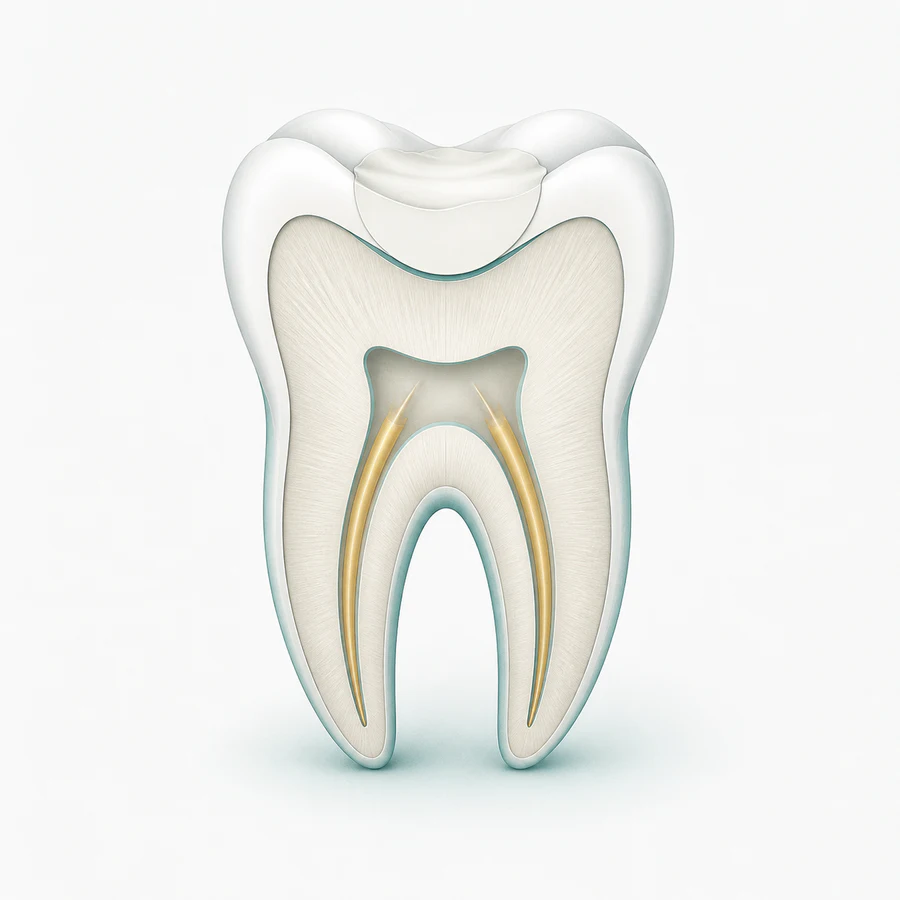
Root-canal and restorative treatment can be considered when decay, a crack, trauma or previous dental work has affected a tooth. Diagnosis is essential because similar symptoms can have different causes, and the tooth must also be assessed for restoration.
Assessment first. Suitability is determined after an examination and any appropriate diagnostic records.
When might this treatment be considered?
These examples are general and cannot diagnose the cause of a concern.
Decay or damage needs a tooth-coloured restoration.
Symptoms or test findings suggest the pulp inside a tooth may be inflamed or infected.
A root-treated tooth needs internal support before a final restoration.
A broken or weakened tooth needs assessment for rebuilding.
A previous restoration has failed or the tooth has changed since treatment.
Treatment options
The most appropriate option depends on clinical findings, priorities and informed discussion.
Tooth-coloured filling
Composite material may restore a selected area after damaged or decayed tissue is assessed and managed.
Root-canal treatment
The internal canal space is cleaned, shaped and sealed when treatment of the dental pulp and root canal system is indicated.
Post and core
A post and core may help rebuild selected root-treated teeth before a final restoration.
Cast post and core
A laboratory-made post-and-core approach may be considered for particular tooth and canal conditions.
Definitive restoration
A filling or crown may be planned to restore function and protect remaining tooth structure, depending on the tooth.
Services listed in this category
Tooth-coloured fillings
Root-canal treatment
Post and core
Cast post and core
Restoration of damaged teeth
Assessment and diagnosis
A consultation helps the dentist understand the concern and identify appropriate next steps.
01
History of pain, sensitivity, swelling, trauma and previous treatment.
02
Examination of the tooth, nearby tissues, bite and remaining tooth structure.
03
Relevant clinical tests that help identify the source of symptoms.
04
Digital dental X-rays where clinically indicated.
05
Discussion of restoration, root-canal treatment, monitoring, referral or removal where appropriate.
Treatment journey
What the process may involve
01
Diagnose the concern
Symptoms, tests and imaging are considered together rather than diagnosing from pain alone.
02
Discuss options
The dentist explains whether the tooth may be restored, treated internally, monitored or considered for another approach.
03
Control and rebuild
The planned filling, root-canal or core procedure is completed in the stages the tooth requires.
04
Final restoration
A suitable final filling or crown is planned when required to restore the tooth.
05
Review
Symptoms, healing, bite and restoration are checked according to the individual plan.
Potential benefits and important considerations
Potential benefits
May help preserve a natural tooth that can be predictably restored.
Can address decay, structural damage or infection after diagnosis.
Provides staged options for rebuilding selected weakened teeth.
Allows tooth preservation and removal options to be discussed openly.
Limitations and considerations
Not every painful tooth needs root-canal treatment, and some teeth cannot be predictably restored.
More than one appointment may be needed depending on infection and complexity.
Root-canal treatment and restorations can require further care or fail over time.
A crown or other final restoration may be advised after root-canal treatment.
No treatment can guarantee that a tooth will be retained indefinitely.
Recovery or adaptation
The tooth or surrounding area may feel tender for a period after treatment.
Numbness from local anaesthetic should be considered before eating or drinking hot items.
Increasing pain, swelling or other worrying symptoms should be reported promptly to the treating clinician.
Treatment length and recovery vary according to clinical complexity and individual response. Follow the advice given for your own care.
Aftercare
Protect a temporary restoration and follow the chewing advice provided.
Complete the planned final restoration and reviews rather than leaving treatment unfinished.
Clean the tooth and surrounding gums as instructed.
Seek review if a temporary filling is lost, the tooth fractures or symptoms worsen.
Frequently asked questions about root canal & restorative care
No. Tooth pain can have different causes. A clinical examination, relevant tests and sometimes an X-ray are needed before treatment is recommended.
The number and length of visits vary with the tooth, infection, anatomy, restoration needs and individual response.
Some root-treated teeth need a crown or another protective restoration, while others may be restored differently. Remaining tooth structure and bite guide the decision.
No. The tooth must be treatable and restorable, and healing cannot be guaranteed. Alternatives and limitations should be discussed before treatment.
Follow the clinic’s instructions, protect any temporary filling and contact the treating clinician if it is lost or if pain or swelling increases.