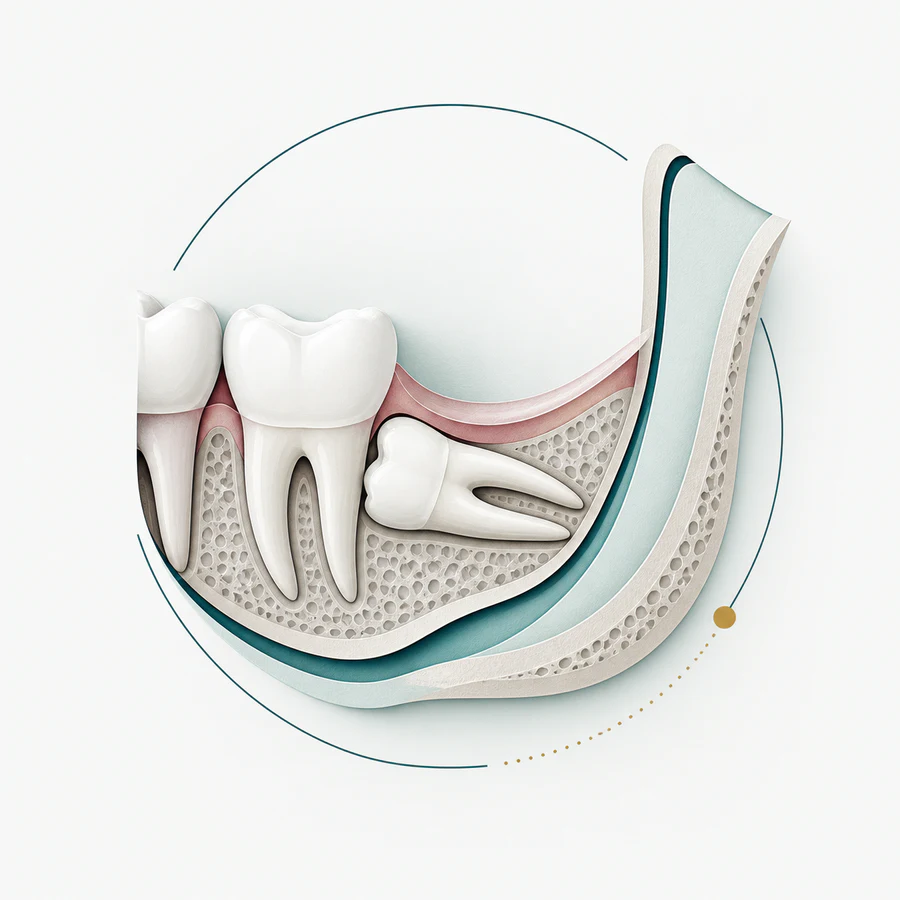
Oral surgery may be considered when a tooth or retained root cannot be managed with a straightforward approach. Examination and appropriate imaging help determine whether treatment, monitoring or referral is the suitable next step.
Assessment first. Suitability is determined after an examination and any appropriate diagnostic records.
When might this treatment be considered?
These examples are general and cannot diagnose the cause of a concern.
A wisdom tooth is painful, swollen, difficult to clean or affecting nearby tissues.
A tooth is impacted or positioned in a way that requires surgical assessment.
A tooth cannot be removed using a routine extraction approach.
A root remains after fracture or previous extraction.
A selected minor oral condition needs examination to decide treatment or referral.
Treatment options
The most appropriate option depends on clinical findings, priorities and informed discussion.
Assessment or monitoring
Not every impacted or symptom-free tooth requires removal; findings and future risks are considered individually.
Surgical extraction
A planned surgical approach may be used when access, tooth position or fracture makes a routine extraction unsuitable.
Retained-root removal
A remaining root is assessed for removal based on symptoms, position, planned restoration and surrounding structures.
Impacted-tooth treatment
The dentist may discuss observation, surgical management or coordination with another treatment plan.
Referral
If a procedure requires care beyond the appropriate clinic scope, the next suitable referral step should be discussed.
Services listed in this category
Wisdom-tooth assessment
Impacted tooth treatment
Surgical extractions
Retained-root removal
Selected minor oral-surgical procedures
Assessment and diagnosis
A consultation helps the dentist understand the concern and identify appropriate next steps.
01
History of pain, swelling, infection, limited opening or previous treatment.
02
Review of relevant medical history, medicines, allergies and healing factors.
03
Examination of the tooth, surrounding gums, mouth and nearby teeth.
04
Digital dental X-rays where clinically indicated.
05
Discussion of observation, treatment, referral, risks and recovery expectations.
Treatment journey
What the process may involve
01
Clinical assessment
The dentist evaluates symptoms, tooth position and surrounding tissues.
02
Imaging and planning
Appropriate imaging helps clarify anatomy and whether treatment can be planned safely in the clinic.
03
Consent
The procedure, alternatives, limitations, risks and aftercare are discussed before a decision.
04
Procedure
Treatment follows the agreed surgical plan with instructions tailored to the procedure.
05
Recovery and review
Healing is monitored according to the procedure and any symptoms that need earlier attention are explained.
Potential benefits and important considerations
Potential benefits
May address a tooth or root that is causing symptoms or cannot be restored.
Uses examination and imaging to support a planned approach.
Allows monitoring and referral to remain valid alternatives where appropriate.
Provides procedure-specific aftercare and review.
Limitations and considerations
Surgical treatment is not automatically required for every impacted tooth.
All surgical procedures carry risks that must be discussed for the individual case.
Swelling, bruising, tenderness and limited opening can occur during recovery.
Complex anatomy or medical factors may make referral the appropriate option.
Healing times and outcomes vary.
Recovery or adaptation
Follow the written instructions for pressure, cleaning, food, activity and prescribed medicines.
Some swelling and discomfort may occur, with the expected pattern depending on the procedure.
Seek prompt professional help for uncontrolled bleeding, rapidly increasing swelling, breathing or swallowing difficulty, or other severe symptoms.
Treatment length and recovery vary according to clinical complexity and individual response. Follow the advice given for your own care.
Aftercare
Keep the area clean using the method and timing advised by the treating clinician.
Avoid disturbing the surgical site and follow food and activity instructions.
Take only medicines that have been advised for you and follow their directions.
Attend a review when requested or sooner if symptoms worsen unexpectedly.
Frequently asked questions about oral surgery
No. Symptoms, disease, position, cleaning, nearby structures and future treatment needs are assessed before removal or monitoring is advised.
Imaging is often useful for surgical planning, but the type and need depend on the tooth and clinical findings.
Recovery varies with the procedure, complexity and individual healing. The treating clinician will explain the expected pattern for your case.
Yes. Anatomy, medical factors or procedure complexity can make referral the appropriate next step.
Follow the clinic’s written advice. Uncontrolled bleeding, rapidly increasing swelling, breathing or swallowing difficulty, or severe worsening symptoms need prompt professional assessment.